Ceramic Coating FAQ
General
Our coatings are built on silicon dioxide chemistry — a complex matrix of technologies that cross-link tightly to form a hard, durable 9H layer bonded to the surface underneath.
9H is a hardness rating from the Pencil Hardness Test, a standard used across the coatings industry. Pencils of graded hardness are drawn across a cured surface to determine the point at which it scratches. 9H is the top of that scale.
It’s a useful measure of scratch resistance, not a promise of invulnerability. A coating resists swirl marks from washing. It does not stop a rock chip — that’s what paint protection film is for.
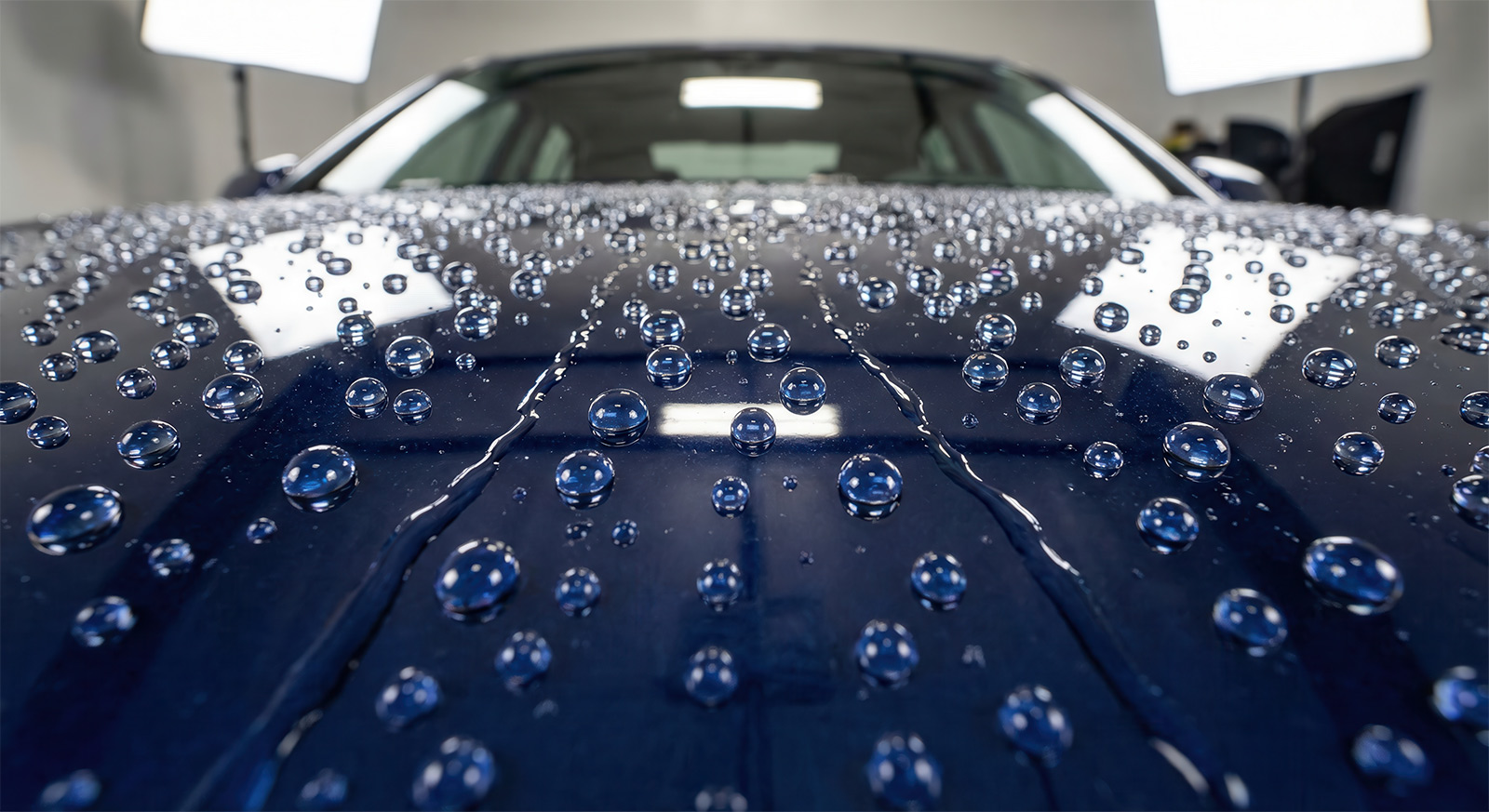
Easier maintenance, hydrophobic water behavior, self-cleaning properties, better gloss and depth, and real protection against environmental fallout.
It depends on the package. Our entry-level paint coatings run two to three years, mid-tier packages five years, and our top package is warranted for the life of your ownership with annual inspections. Glass coatings typically last one to two years; upholstery and trim coatings run two to three.
We’ll give you the exact duration and terms in writing before we start, and again on your paperwork when you pick the car up.
The coating cross-links with the painted surface to create a new functional layer. Because it forms a molecular bond with the paint, it can’t be washed off the way a wax or sealant eventually is.
No. Coatings are hard, not elastic — hardness is what makes them scratch-resistant, and it’s also why they can’t self-heal. Our paint protection films do self-heal with heat.
→ paint protection filmCoating vs. Paint Protection Film
They’re not really comparable products, so it isn’t a fair fight in either direction.
Paint protection film is a urethane layer, measured in mils, that physically absorbs rock chips and scratches. Ceramic coating is measured in microns — even fully cured, it is not engineered to stop a stone at highway speed.
What coating does exceptionally well is protect against environmental contamination: bird droppings, bug acid, sap, water spotting, and track rubber. It also delivers gloss, depth, and hydrophobic behavior that film alone doesn’t.
So: coating is for customers who want basic protection plus shine and easy maintenance. PPF is for customers who want actual impact protection.
Very often — it’s the most common combination we install. PPF handles rock chips and road debris; coating over the top adds hydrophobic performance, self-cleaning, and gloss to the film. You get the protection of one and the maintenance behavior of the other.
Yes, and no. Our paint and PPF coating can be applied over satin film. It will not make the surface glossy — it enhances the depth of the matte finish while making it far easier to clean, which matters a great deal on flat finishes.
→ satin paint protection filmAftercare
Cure time varies by coating. As a general rule, keep the vehicle dry for the first 24 hours and don’t wash it for seven days. We’ll give you the specific window for your coating when you collect the car.
Use a pH-neutral car wash soap. Avoid anything with wax, gloss enhancers, or harsh detergents — they leave a film that masks the coating’s hydrophobic behavior and makes customers think their coating has failed when it hasn’t.
Two-bucket method, clean microfiber, and no automatic car washes with brushes. A quality maintenance spray after washing restores slickness between details.
Warranty terms vary by package. Most of our packages cover hydrophobic performance for a defined period provided the car is maintained per the aftercare instructions and inspected annually. Improper washing — brush car washes, harsh chemicals, aggressive polishing — voids that portion of the coverage. We’ll walk you through the specific terms of your package before you leave.
Use an ammonia-free glass cleaner with a clean microfiber towel. Avoid ammonia-based household cleaners, which degrade the coating over time.
A pH-neutral car wash soap is all it needs. The coating does the rest — that’s the point of applying it.
By Surface
Yes. It’s a 9H coating engineered to resist the light scratching and swirl marks that come from washing and drying.
No. Glass ceramic coating is not a protection film — it makes the surface hydrophobic, cuts glare, and makes cleaning easier, but it will not stop a stone. For impact protection on glass, you want windshield protection film.
→ windshield protection filmYes. It protects plastic and trim from UV-driven fading, and it also rejuvenates the surface appearance of trim that’s already started to go gray.
Yes. Our wheel and caliper coating is formulated for the sustained high temperatures wheels and calipers operate at, and it makes brake dust dramatically easier to remove.
→ wheel repair and powder coatingIt won’t discolor factory interiors — the coating allows the material to breathe and retains its natural feel and appearance. It helps prevent stains and spills from setting in on fabric, carpet, leather, and vinyl, but it is not a waterproofing treatment.
It can be applied to fabric, carpet, leather, and vinyl, including carpets. Do not apply it to Alcantara or suede. All interior surfaces must be professionally cleaned before application.