Paint Correction in Farmingdale, Long Island, NY
What Is Paint Correction?
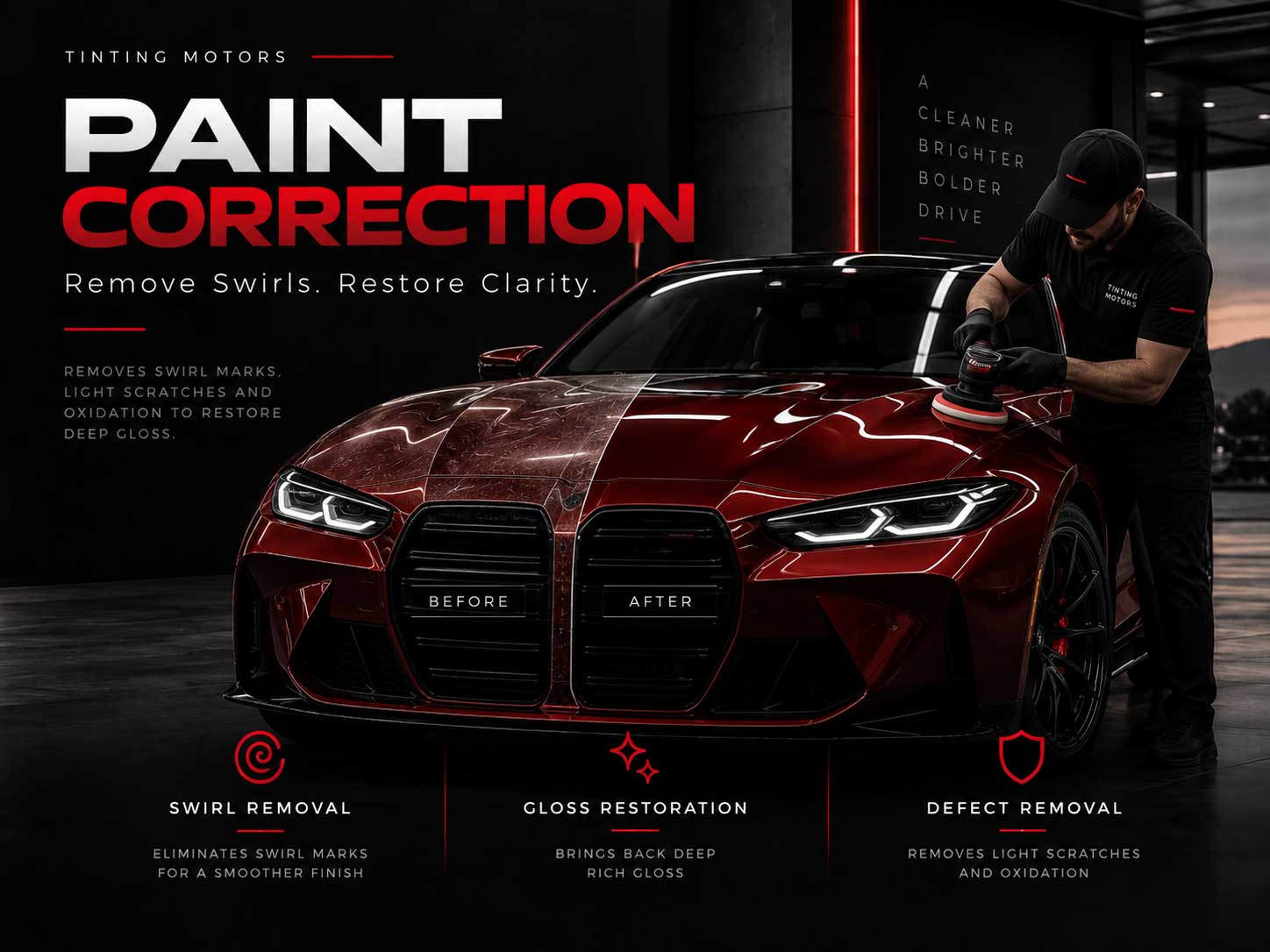
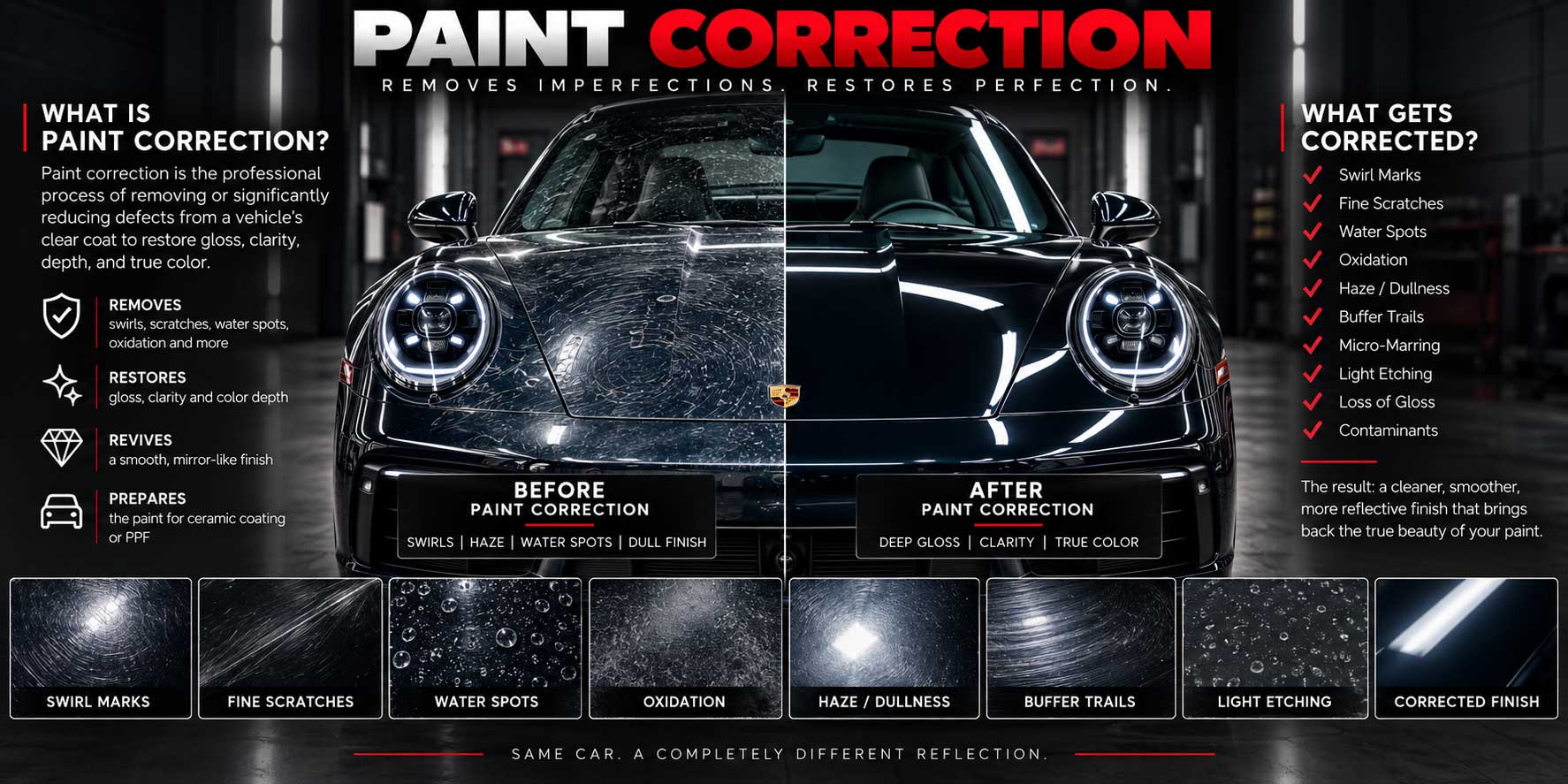
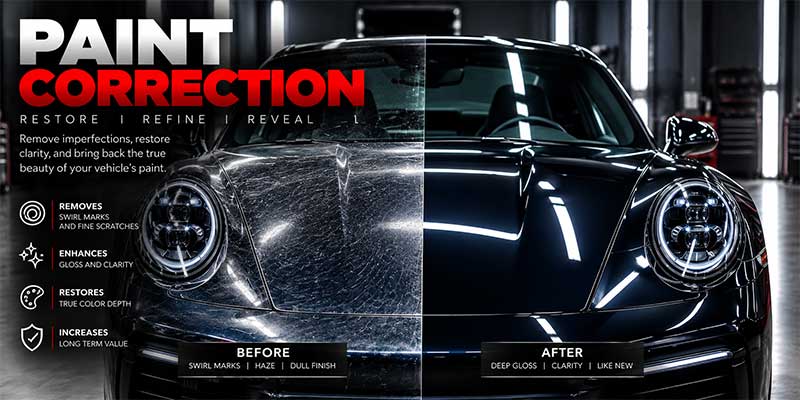
Paint correction is the professional process of removing or significantly reducing imperfections from a vehicle’s clear coat to restore gloss, clarity, depth, and reflection.
Over time, improper washing, automatic car washes, environmental contamination, and everyday use can leave the paint covered in swirl marks, fine scratches, water spots, oxidation, haze, and other surface defects. These imperfections scatter light across the surface, making otherwise good paint look dull or damaged.
At Tinting Motors in Farmingdale, NY, our paint correction process uses professional machine polishing, specialized compounds, finishing polishes, pads, and controlled techniques to carefully refine the clear coat.
The goal isn’t to hide imperfections with wax or glaze. Paint correction actually levels and refines microscopic defects in the clear coat, producing a cleaner, deeper, more reflective finish.
What Does Paint Correction Remove?
Professional automotive paint correction can significantly improve many common paint defects, including:
Not every scratch can or should be completely removed. Deep scratches that penetrate through the clear coat may require touch-up paint or refinishing rather than aggressive polishing.
Our goal is always to achieve the best possible improvement while preserving the integrity of the factory clear coat.
Paint Correction Before & After
See What Proper Paint Correction Can Do
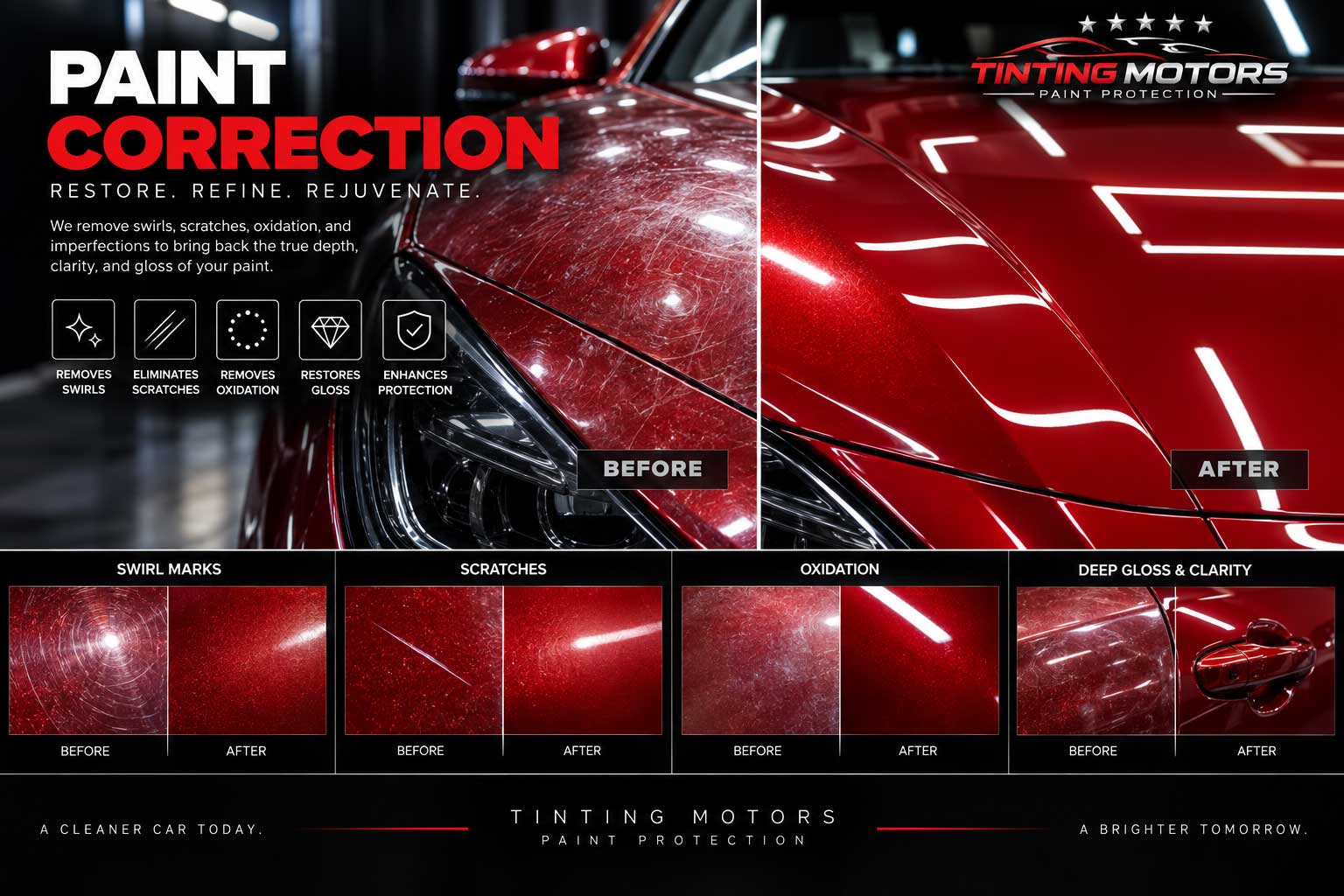
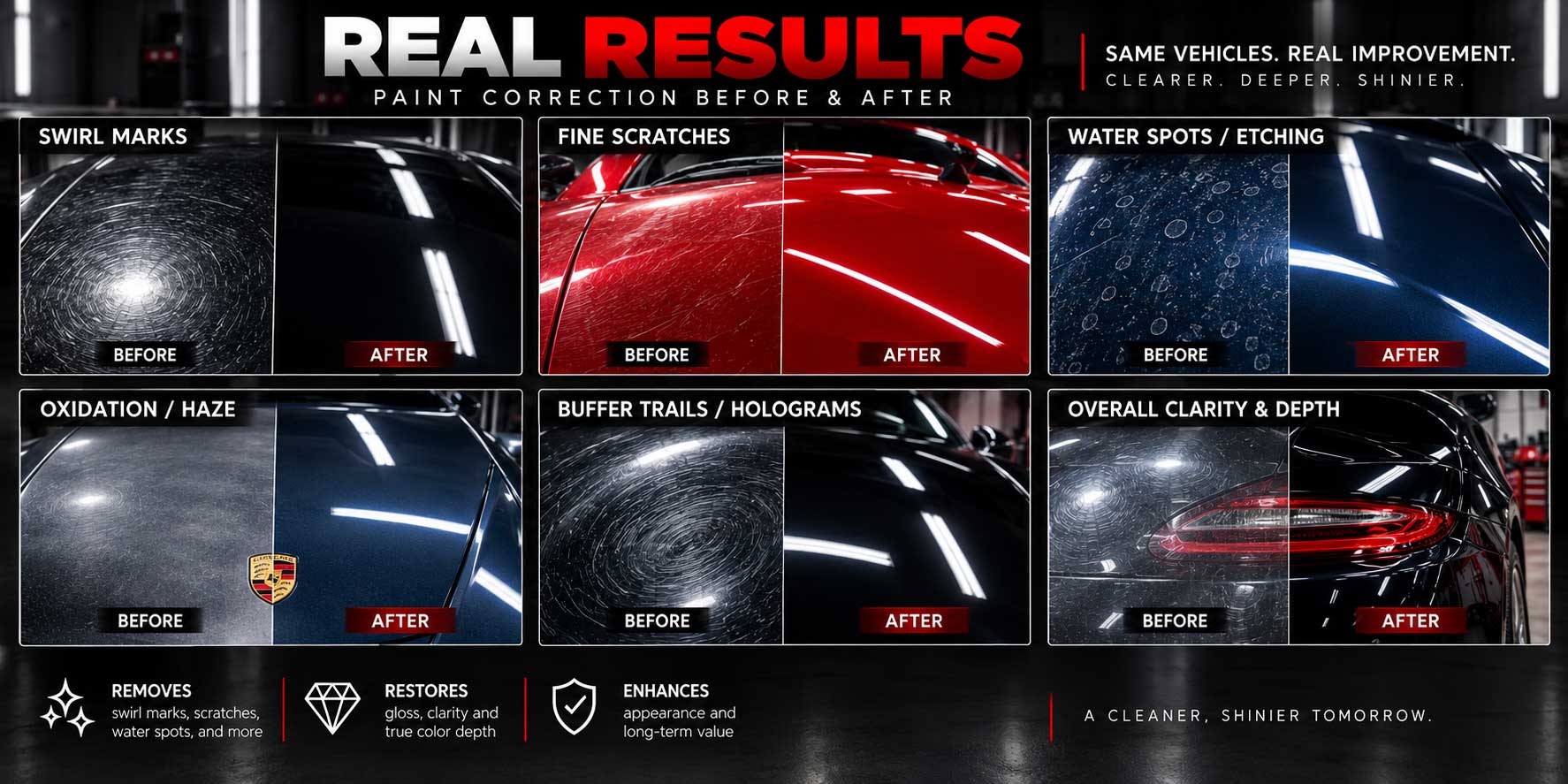
Paint correction can dramatically change how a vehicle looks because it restores the way light reflects from the surface.
- Swirl marks
- Fine scratches
- Haze
- Water spotting
- Dull reflections
- Reduced color depth
- Greater paint clarity
- Sharper reflections
- Deeper color
- Reduced swirl marks
- Improved gloss
- Cleaner, more uniform finish
How Does Paint Correction Work?
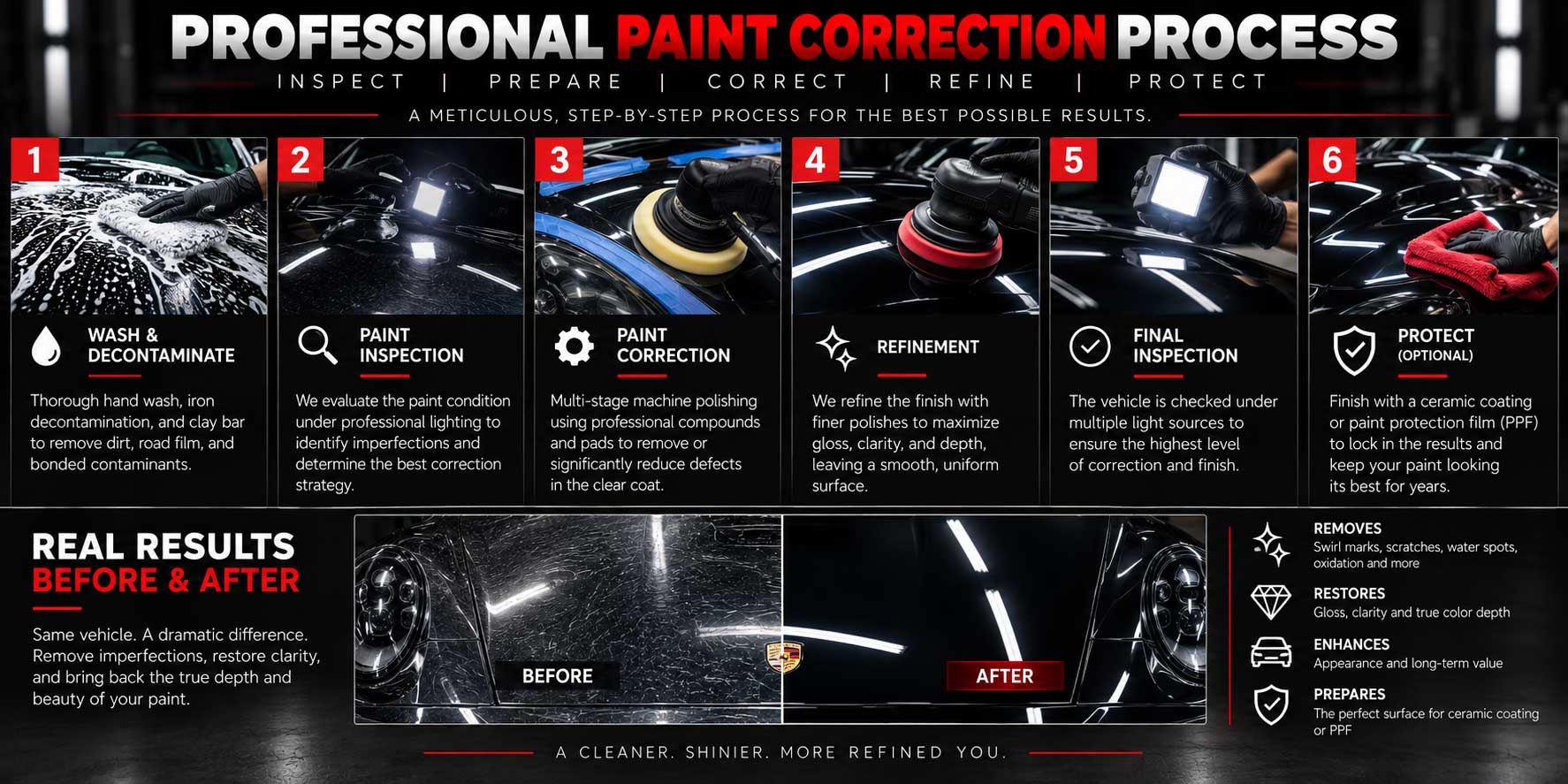
A Professional Multi-Step Process
Paint correction is much more involved than simply polishing a vehicle.
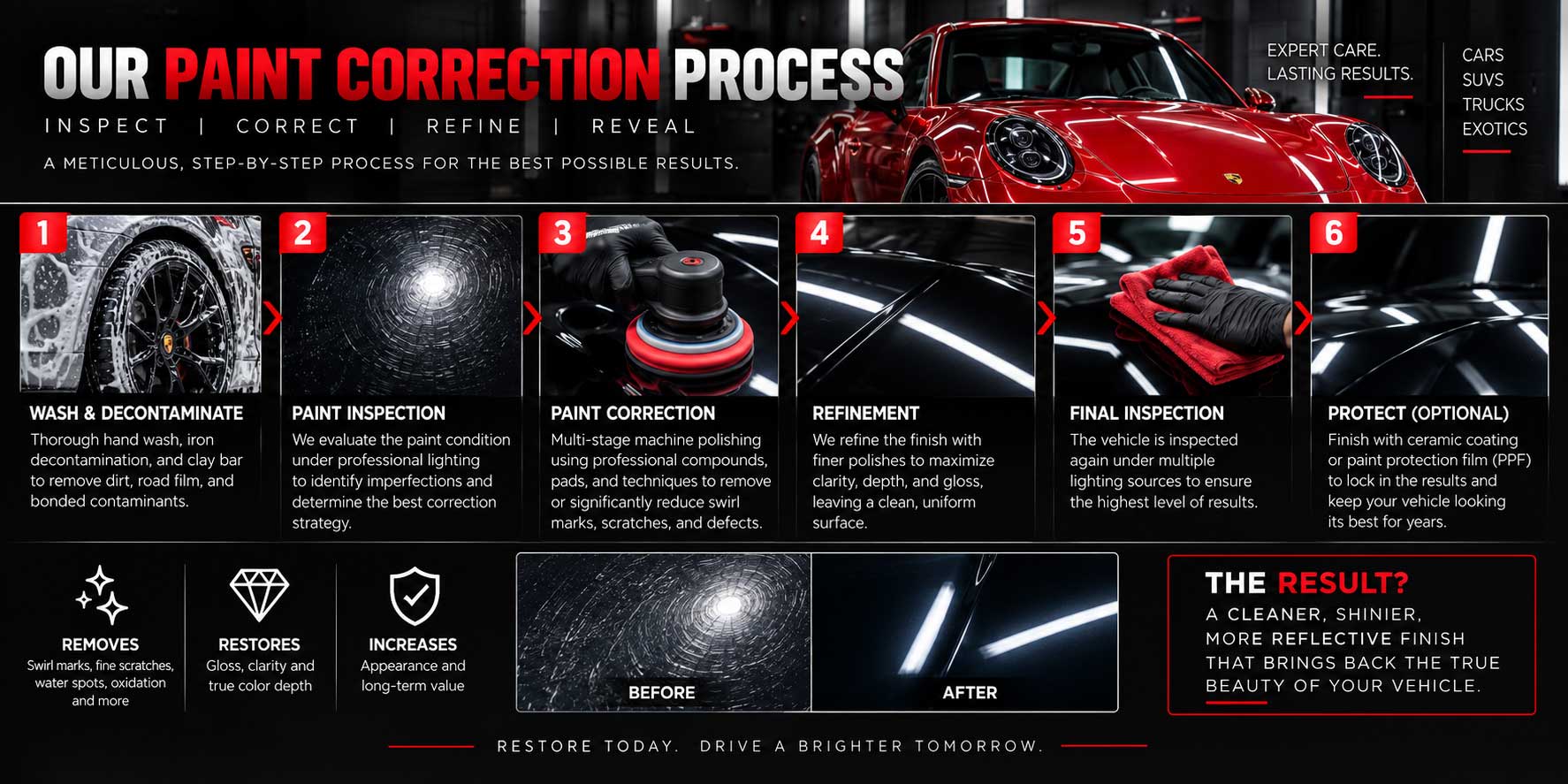
Paint Inspection
We inspect the vehicle’s paint condition, identify defects, and determine an appropriate correction strategy.
Wash & Decontamination
The vehicle is thoroughly cleaned and decontaminated to remove dirt, road film, iron contamination, and bonded contaminants.
Paint Preparation
Sensitive areas are prepared and protected before machine polishing begins.
Machine Paint Correction
Professional polishing machines, pads, compounds, and finishing polishes are selected based on the condition and characteristics of the paint.
Refinement
The finish is refined to maximize clarity and minimize haze or polishing marks.
Final Inspection
We inspect the corrected paint under specialized lighting before protection is applied.
Paint Correction vs. Polishing
Customers often use the terms interchangeably, but there is an important difference.
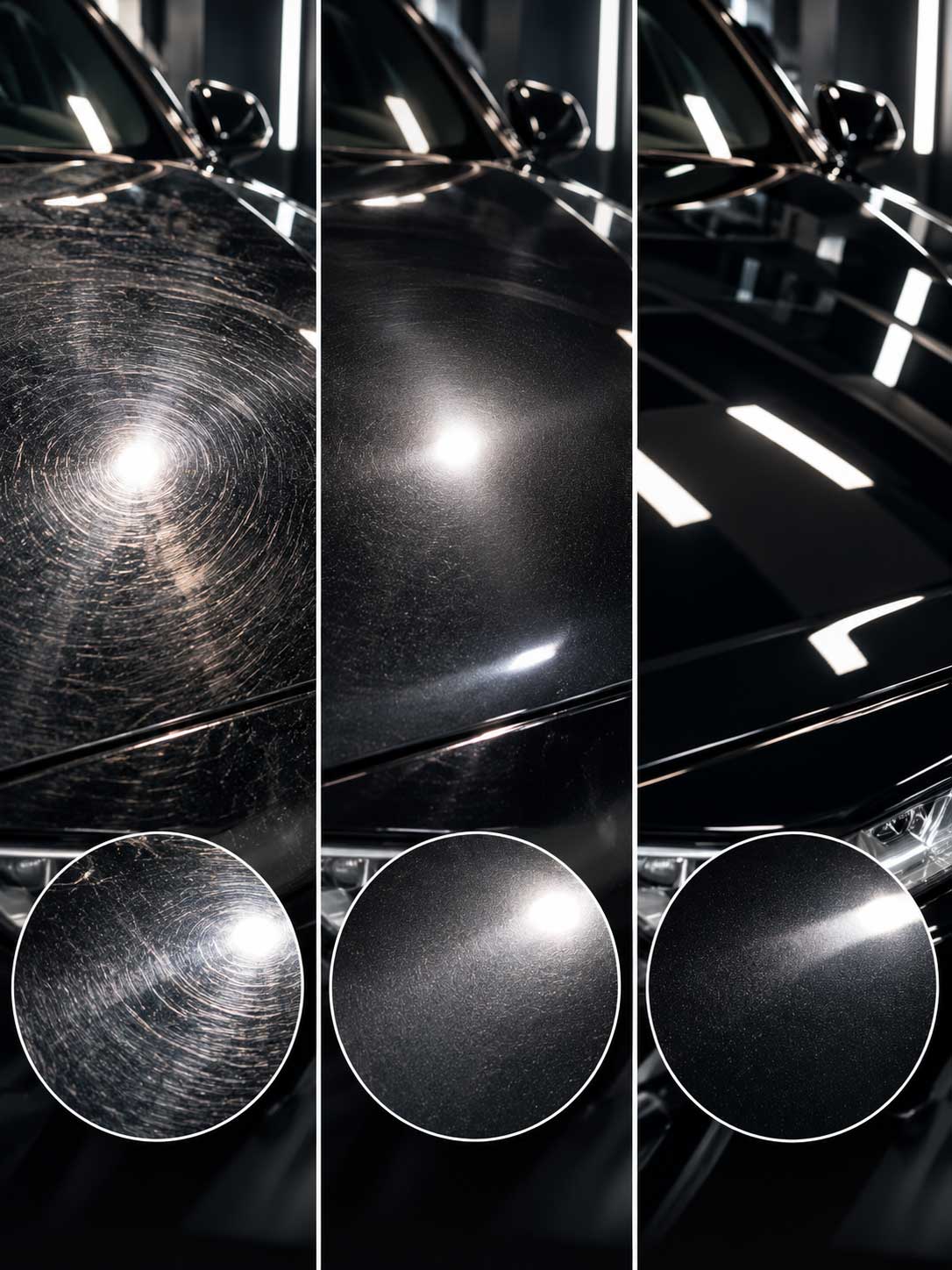
A basic polish may improve shine and temporarily make the paint look better. Professional paint correction is focused specifically on permanently reducing measurable defects in the clear coat through controlled abrasive polishing.
Rather than covering swirl marks with fillers, proper correction removes or reduces the defects responsible for distorted reflections.
Paint Correction vs. Ceramic Coating
These are two different services that work extremely well together.
Paint Correction
Paint correction improves the existing paint.
Ceramic Coating
Ceramic coating protects and enhances the corrected surface.
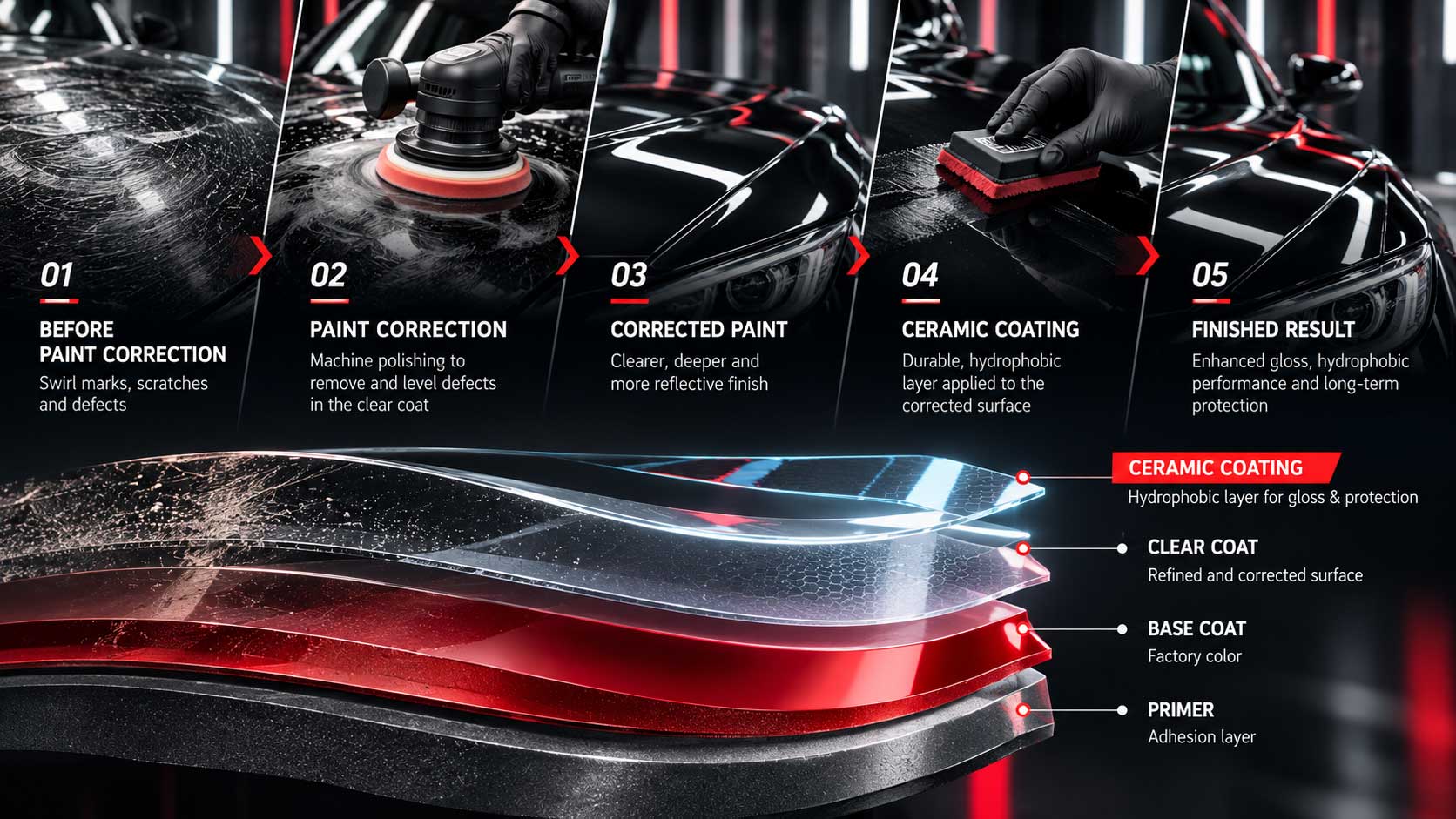
If ceramic coating is applied over heavily swirled paint, those imperfections remain underneath the coating. That’s why paint condition should be evaluated before ceramic coating installation.
For vehicles that need correction, our preferred sequence is:
Once the paint has been corrected, ceramic coating can enhance gloss, add hydrophobic performance, and make the vehicle easier to maintain.
Paint Correction Before PPF
Paint correction can also be performed before Paint Protection Film (PPF) when necessary.
Because PPF is installed directly over the painted surface, we want the finish underneath the film properly prepared before installation.
A new vehicle may need little or no correction, while an older vehicle with visible defects may benefit from correction before PPF is installed.
Does a New Car Need Paint Correction?
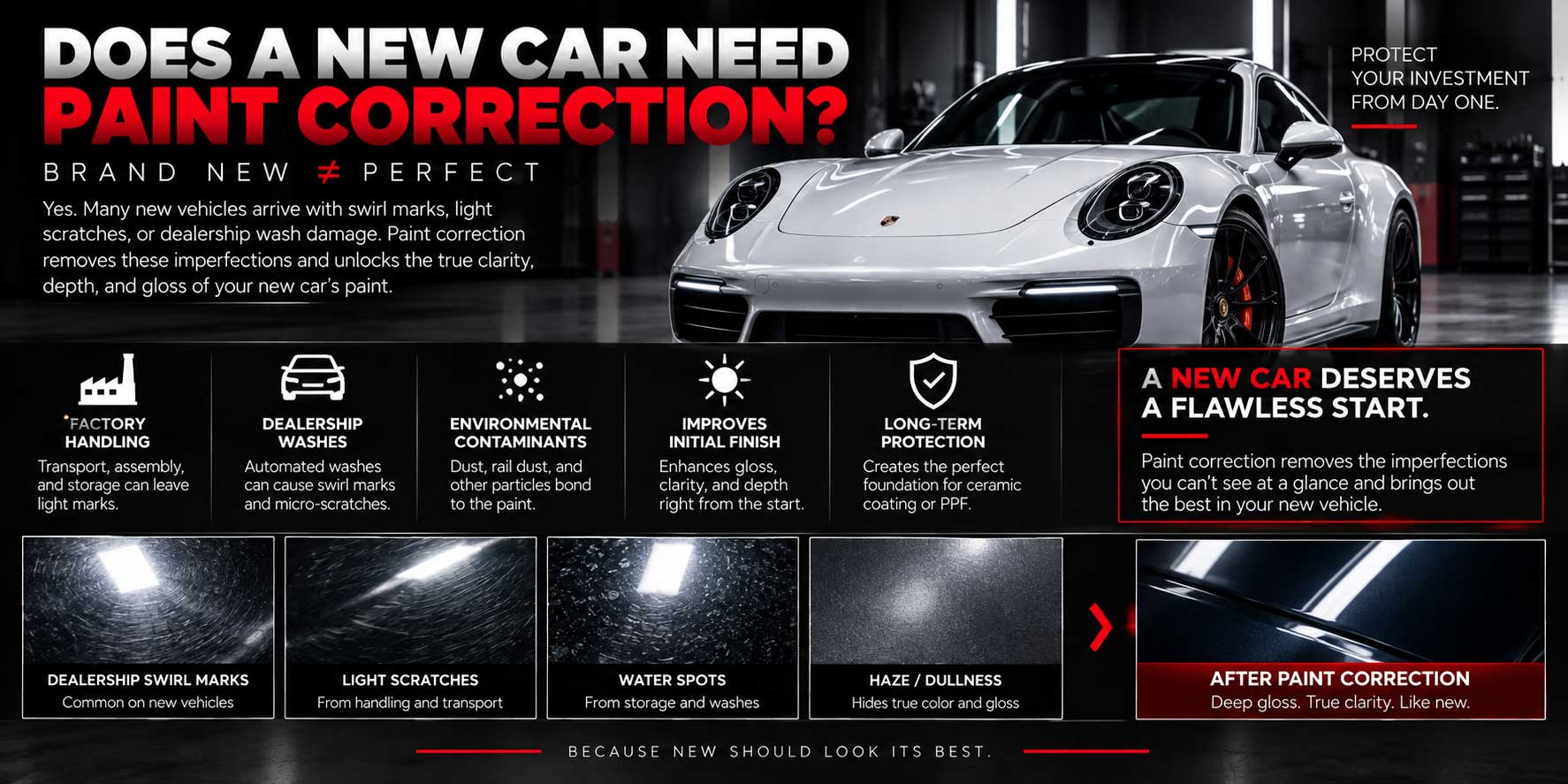
A brand-new vehicle does not automatically mean flawless paint. Transportation, dealership preparation, improper washing, storage, and delivery can introduce swirl marks, water spots, light scratches, and contamination before the customer ever takes possession.
We inspect the paint first and recommend only the level of correction actually necessary.
Can Paint Correction Remove Every Scratch?
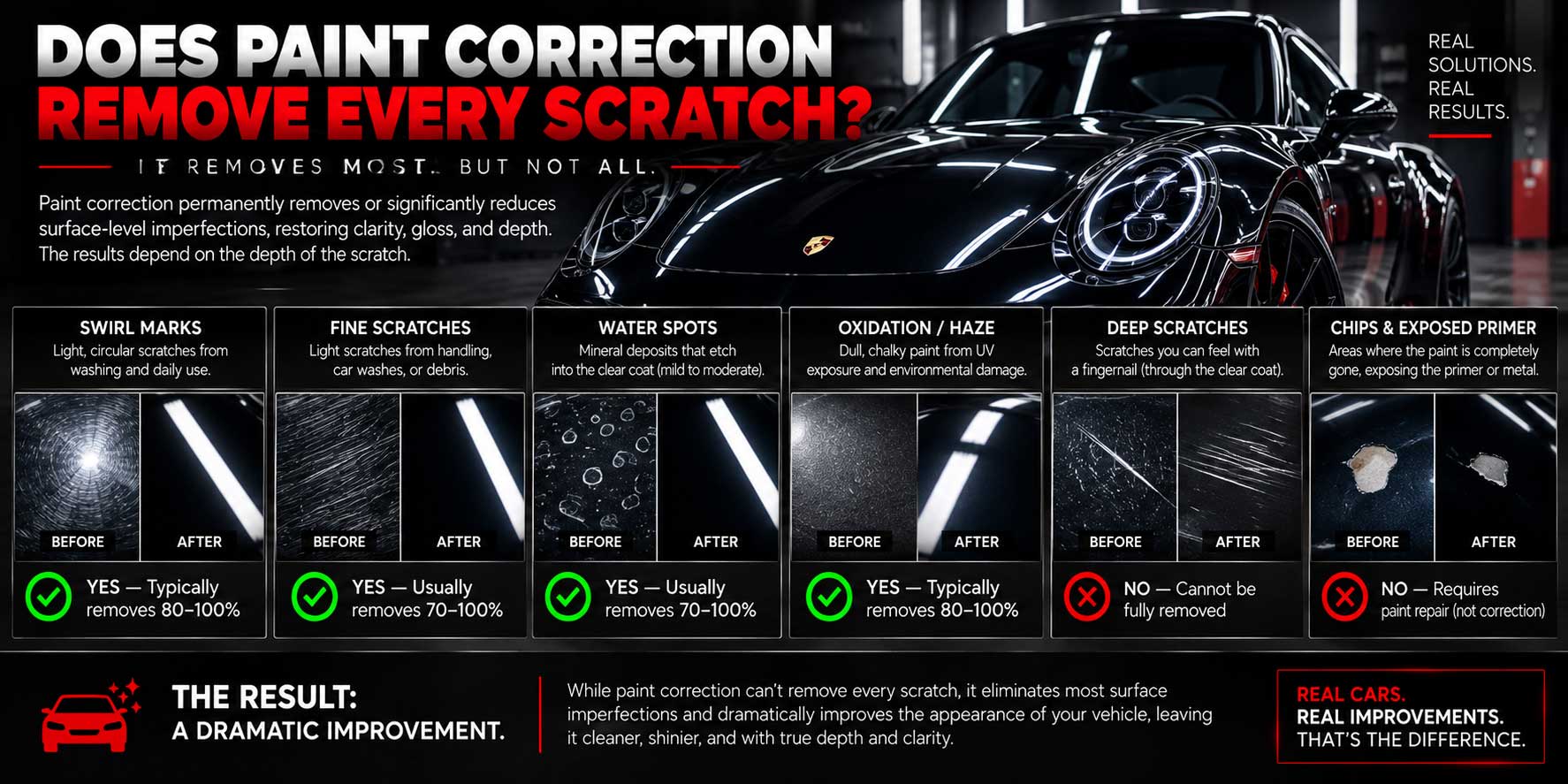
Paint correction works on defects located within the polishable portion of the clear coat. Some deeper scratches penetrate too far to safely remove through polishing.
Trying to eliminate every defect can unnecessarily remove clear coat.
Our approach is to balance defect removal, appearance improvement, and preservation of the paint system.
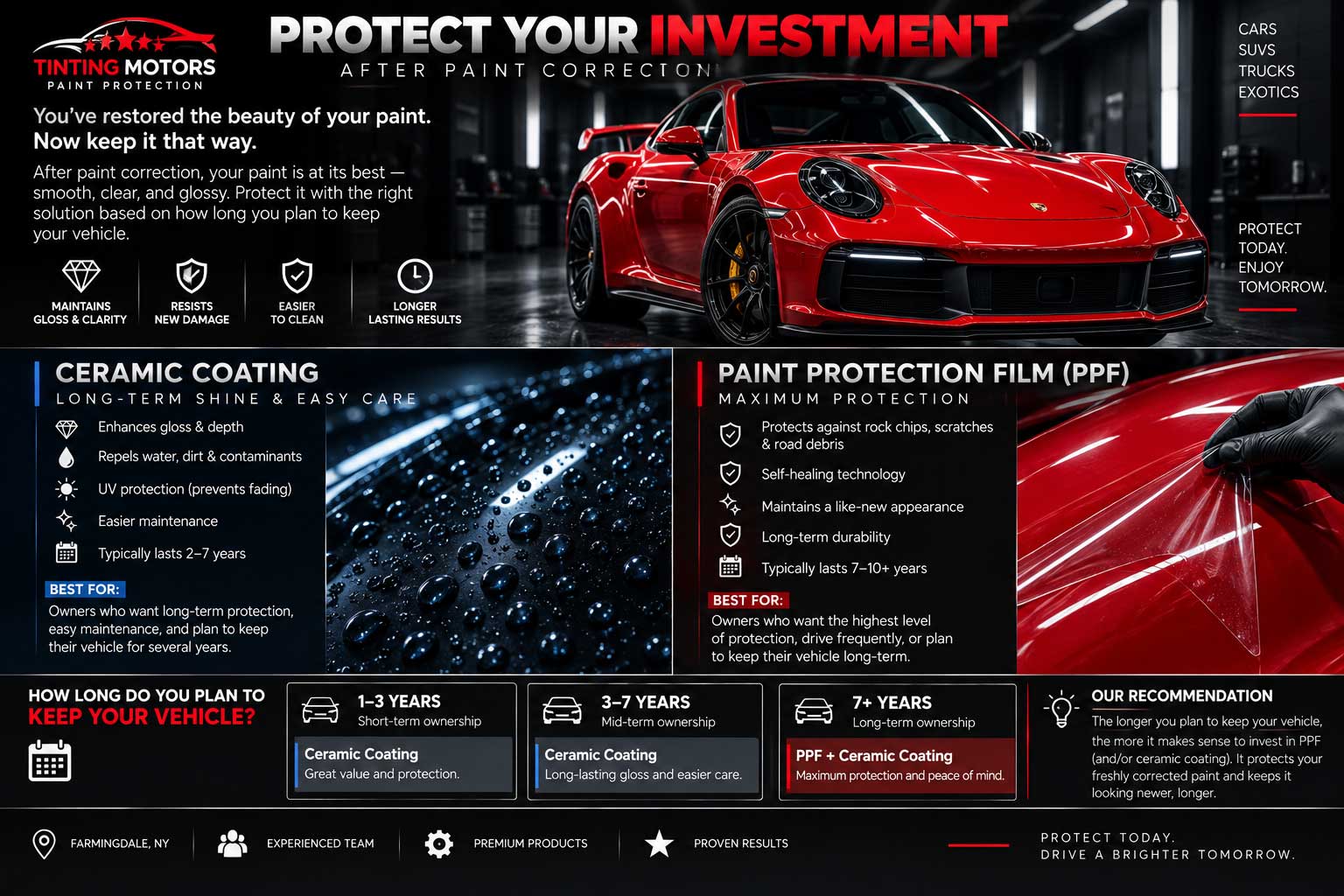
Protecting Your Paint After Correction
Once paint correction has restored the finish, protecting that result becomes important.
Customers can choose ceramic coating for enhanced gloss, hydrophobic performance and easier maintenance, or Paint Protection Film (PPF) for physical protection against rock chips, scratches and road debris.
For maximum exterior protection, PPF and ceramic coating can be combined after appropriate paint preparation.